Research Advisory Council
Several distinguished scholars and practitioners have graciously agreed to advise us on our research program. These colleagues' role is to offer their perspectives and professional experiences to guide planning, ongoing project management, data interpretation, dissemination of findings, and implementation of curricular and programmatic materials.
Advisory Council Members
|
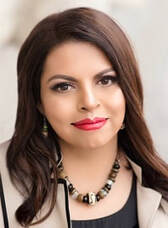
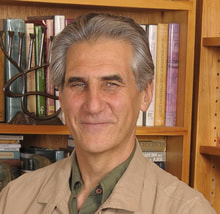
Dr. Kakali Bhattacharya is a multiple award-winning professor at the University of Florida. Housed in the Research, Evaluation, and Measurement program, she serves as a qualitative methodologist for the College of Education. For the last fifteen years, Dr. Bhattacharya has explored qualitative research through critical, de/colonial, creative, transnational, and contemplative perspectives. She is the 2018 winner of AERA’s Mid-Career Scholar of Color Award and the 2018 winner of AERA’s Mentoring Award from Division G: Social Context of Education. Her co-authored text with Kent Gillen, Power, Race, and Higher Education: A Cross-Cultural Parallel Narrative has won a 2017 Outstanding Publication Award from AERA (SIG 168) and a 2018 Outstanding Book Award from International Congress of Qualitative Research. She was recognized as one of the top 25 women in higher education by Diverse magazine for her significant contribution to social justice work and efforts to de/colonize qualitative research Dr. Alan Berkowitz is an independent consultant with expertise in culture change, gender issues, behavioral health, ending men’s violence, and fostering social justice. He has received five national awards for his scholarship and innovative programs on substance abuse and sexual assault prevention, men’s role in ending violence against women, gender issues, bystander intervention theory and skills, and diversity. At Hobart and William Smith Colleges he developed a model rape prevention program for men that was recently evaluated and found to reduce actual sexual assaults by 75% at 4-month follow-up. Alan is a frequent keynote speaker at national conferences, a co-founder of the social norms approach, the author of a book on bystander intervention theory and skills, and currently serves as a sexual assault prevention and bystander intervention subject matter expert for the US Army, Marine Corps, Navy and Air Force. He received his Ph.D. in Psychology from Cornell University and is a licensed psychologist. |
|
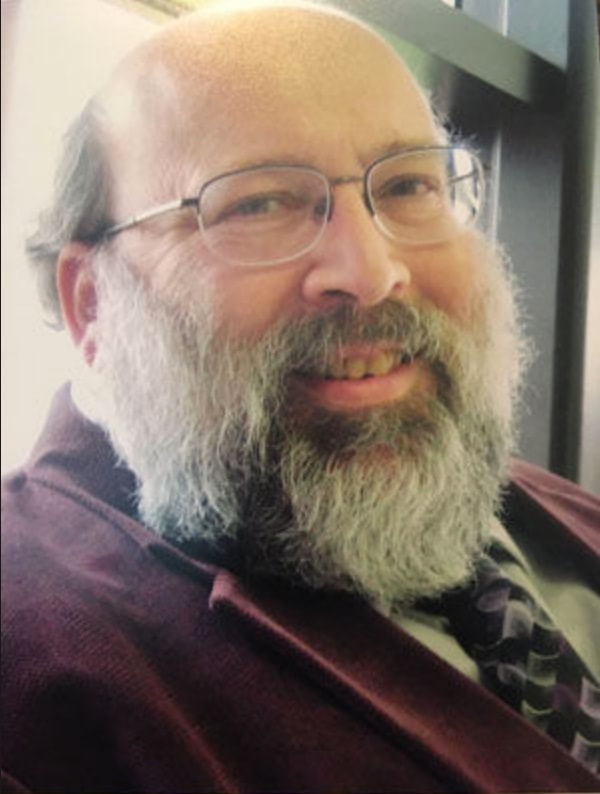
JASON: Dr. Harry Brod was my dear and respected mentor and friend for over 20 years. I want to continue expressing my gratitude for his kindness, inspiration, support and intellectual leadership by retaining his bio here. His profound and creative scholarly contributions continue to guide me and this project. He appeared in my first documentary, about male friendships. I produced it in 1997 and it can be viewed by clicking on it at the bottom of the page linked here. Harry's obituary here. Dr. Harry Brod (February 1, 1951 – June 16, 2017) was a child of Holocaust survivors and a child of the 60’s. Both heritages shaped his commitments to justice, expressed in decades of teaching, writing, and activism in the academic study of masculinities (where he was recognized as one of the founding figures of the field) and the profeminist men's movement (for which he has been a leading spokesperson). He earned a PhD in Philosophy and most recently served as Professor of Sociology and Humanities at the University of Northern Iowa. Dr. Brod served as Director of the Iowa Regent Universities Men’s Gender Violence Prevention Institute and on the Boards of Directors of Humanities Iowa and the American Men’s Studies Association. He was a member of the Iowa Governor's Task Force for Responsible Fatherhood and the American Philosophical Association’s Committee on Public Philosophy. He received the Harry Cannon Award for Exemplary and Sustained Contributions to the Field of Men's Studies from the American College Personnel Association’s Standing Committee for Men, as well as the Leadership and Service Award from the Men’s Center of Saint John’s University (MN), and held a Fellowship in Law and Philosophy at Harvard Law School. He is survived by his two children, Artemis and Alex, and his life partner of 18 years, Dr. Karen Mitchell. A DVD of his lecture “Asking For It: The Ethics and Erotics of Sexual Consent,” produced by Media Education Foundation is used to educate on consent by colleges, universities and other institutions internationally, including by the US Air Force. His most recent book is Superman Is Jewish?: How Comic Book Superheroes Came to Serve Truth, Justice and the Jewish-American Way, published by Free Press (Simon & Schuster) in 2012. His previous books are Hegel's Philosophy of Politics: Idealism, Identity and Modernity (Westview, 1992) and the edited volumes The Making of Masculinities: The New Men's Studies (Routledge, 1987) and A Mensch Among Men: Explorations in Jewish Masculinity (Crossing Press, 1988), as well as White Men Challenging Racism: 35 Personal Stories, co-authored with Cooper Thompson and Emmett Schaefer (Duke University Press, 2003), Theorizing Masculinities, co-edited with Michael Kaufman (Sage, 1994), Brother Keepers: New Perspectives on Jewish Masculinity, co-edited with Rabbi Shawn Zevit (Men’s Studies Press, 2010), and the co-edited The Legacy of the Holocaust: Children and the Holocaust (Jagiellonian University Press, 2002). |
|
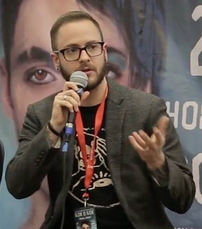
Dr. Cáel M. Keegan is an Assistant Professor of Liberal Studies at Grand Valley State University, Michigan, USA. Keegan is an expert in LGBTQ Studies whose research specializes in the analysis of transgender media, image production, aesthetics, and embodiment. Over the course of his career, he has published multiple articles and chapters on queer and transgender representation, including pieces that investigate the emergence of the transnormative subject in film/television of the Global North, trans men’s sexualities and body morphologies, transgender phenomenologies of image reception, trans masculinities and the visibility dynamics of photographic portraiture, and the political economy of post-2008 LGBT film production. His current book project, Lana and Lilly Wachowski: Imaging Transgender is the first to interrogate the directors’ filmography (Bound, The Matrix, Sense8) from a transgender studies perspective. Keegan teaches courses in queer and transgender theory, visual and textual cultures, and LGBTQ social movements at Grand Valley State University. He is currently the national Co-Chair of the Trans/Gender-Variant Caucus of the National Women’s Studies Association in the United States and sits on the advisory board of Genders.
|
|
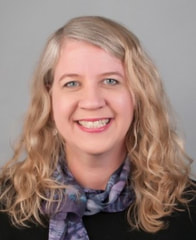
Dr. Susan Marine is an Associate Professor and Program Director in the Higher Education Master’s Program at Merrimack College. She has 20 years’ experience leading initiatives in higher education for the advancement of women and trans* students of all genders, with specific expertise in sexual violence prevention and response, and advocacy for the LGBTQ community. She was the founding director of the Harvard Office of Sexual Assault Prevention and Response and served in various advocacy roles on four different college campuses. Dr. Marine's research focuses on building gender expansive campuses, including ending sexual violence against LGBTQ students and fostering full participation of trans* students. Her work seeks to transform campus cultures and to continually advance social justice in higher education. She has contributed to numerous scholarly journals and books, and is the author of Stonewall’s Legacy: Bisexual, gay, lesbian and transgender students in higher education. Dr. Devon Reckmeyer is a clinical psychologist with the California Department of State Hospitals, and has worked as an Adjunct Professor at San Jose State University. She specializes in clinical and forensic psychology with an emphasis in psychopathy/psychopathic personality, sexual offending behaviors, violence reduction, sexual violence prevention, social justice, diversity, and integrative mental health treatment. She is licensed by the California Board of Psychology, and has been certified by the California Sexual Offender Management Board. Dr. Reckmeyer has worked in a variety of settings including state prisons and hospitals, county jails, parole/probation treatment and evaluations for sexual offenders, substance abuse treatment and outpatient treatment settings, community mental health clinics, and academic settings. Dr. Reckmeyer received her undergraduate degree from Santa Clara University, and earned graduate degrees from American University and Pacific University. |
|
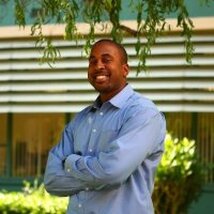
Dr. Karisman Roberts-Douglass is a faculty counselor at San José University Counseling and Psychological Services, Karisman received his undergraduate degree from Santa Clara University and earned his doctorate in clinical psychology from the California School of Professional Psychology (CSPP) - San Francisco. He is licensed by the California Board of Psychology. Karisman has worked in a variety of clinical settings including a juvenile rehabilitation center and community mental health settings for both adolescents and adults struggling with mental illness. His clinical interests include men's issues, healthy relationships, community outreach, and diversity and social justice. Karisman works with college men in numerous capacities and on many issues of masculinity, including sexual violence prevention. His work on masculinity has been published in the Psychology of Men and Masculines Journal and has been presented at various regional and national conferences.
|